Follicular Unit Extraction (FUE) vs Follicular Unit Transplantation (FUT)
Understand the differences between Follicular Unit Extraction (FUE) and Follicular Unit Transplantation (FUT), including how each technique compares in surgery time, hair yield, scarring, healing, density, and the potential need for additional procedures.
4.9 Average Rating
Based on 850 verified patient reviews.
⭐ Trusted by 10,000+ Hair Restoration Patients Since 1997 • No obligation · Private & Confidential · Expert Guidance
FUE vs FUT vs MaxHarvest™
See how Follicular Unit Extraction (FUE), Follicular Unit Transplantation (FUT), and MaxHarvest™ compare.
| Follicular Unit Extraction (FUE) | Follicular Unit Transplantation (FUT) | MaxHarvest™ |
|---|---|---|
| How long is a hair transplant surgery? | ||
| Surgery can take considerably longer because individual follicular units are extracted one at a time. | Surgery time depends on the size of the procedure and the amount of hair being transplanted. | Surgery is typically completed in 4 to 5 hours. Dr. Bolton's MaxHarvest™ procedure is designed to harvest a large number of hairs efficiently in a single session. |
| How many hairs are moved? | ||
| FUE typically involves transplanting a smaller number of hairs per procedure. | The number of hairs transplanted depends on the size of the procedure and the amount of donor hair available. | Depending on the patient's individual variables, MaxHarvest™ can yield approximately 12,000–16,000 hairs in a single procedure. |
| Is there scarring? Or other side effects? | ||
| FUE can leave multiple small, round scars throughout the donor area because individual follicular units are extracted. | FUT involves removing a strip of donor tissue, resulting in a linear donor-area scar. | MaxHarvest™ is combined with Dr. Bolton's specialized harvesting and suture techniques to help minimize the appearance of the donor scar. |
| What about the health of the hair follicles? | ||
| FUE extraction uses a punch to remove individual follicular units. The follicular unit can potentially be damaged during extraction. | FUT removes a strip containing follicular units, which are then prepared for transplantation. | MaxHarvest™ is designed around Dr. Bolton's harvesting technique to maximize the number of hairs that can be obtained from the individual donor area. |
| What is the cost of surgery? | ||
| FUE procedures may cost approximately $6,000–$20,000 per procedure, depending on the scope of treatment. | Cost depends on the size of the procedure and the amount of hair being transplanted. | MaxHarvest™ is designed to maximize the amount of transplanted hair in a single procedure. |
| Will the donor area be visible the first day after the procedure? | ||
| FUE creates individual extraction sites throughout the donor area. The number of visible extraction sites generally corresponds to the number of grafts removed. | FUT produces a linear incision in the donor area following removal of the strip. | MaxHarvest™ is designed to harvest efficiently while minimizing unnecessary disruption to the donor area. |
| How much density will I get? | ||
| Density depends on the number of follicular units that can be safely harvested and transplanted. | Density depends on the available donor hair, the number of grafts transplanted, and the characteristics of the recipient area. | MaxHarvest™ is designed to maximize the number of hairs harvested from the donor area to provide the greatest possible density based on the patient's individual variables. |
| How many surgeries will I need? | ||
| More than one procedure may be required depending on the amount of donor hair available and the density desired. | Additional procedures may be required depending on the patient's donor supply and desired density. | MaxHarvest™ is designed to maximize the amount of hair transplanted in a single procedure, potentially reducing the need for additional procedures. |
| How long does it take to heal? | ||
| Healing time depends on the individual patient and the procedure performed. | Healing time depends on the individual patient and the procedure performed. | Healing typically takes approximately 7–10 days. |
What Is Follicular Unit Extraction (FUE)?
Follicular Unit Extraction (FUE) is a hair transplant technique in which individual follicular units are removed from the donor area using a small punch and then transplanted into areas where hair restoration is needed.
Unlike FUT, which removes a strip of tissue from the donor area, FUE extracts individual follicular units one at a time. Because of this extraction method, multiple small extraction sites can be created throughout the donor area.
FUE is often presented as an alternative to strip surgery because it does not require removal of a linear strip of scalp. However, FUE can involve a significant number of individual extractions and may affect the donor area.
The amount of hair that can be transplanted with FUE depends on the patient's donor area, the number of follicular units that can be safely harvested, and the desired result.
Advantages of FUE
When you look at the advantages of Follicular Unit Extraction (FUE), you may see claims about reduced healing time and the ability to avoid a linear strip scar. However, the extraction method also involves removing individual follicular units throughout the donor area.
Decreased Healing Time
One of the commonly discussed advantages of FUE is a shorter healing period because individual follicular units are removed rather than a strip of scalp.
Donor Area Considerations
Because FUE removes individual follicular units from throughout the donor area, the procedure can leave numerous small extraction sites. Repeated extraction can affect the donor area and may influence the availability of hair for future procedures.
Follicular Unit Extraction
During FUE, a small punch is used to extract individual follicular units. The extraction must be performed carefully because the follicular unit can be damaged during the process.
The way follicular units are extracted can affect the amount of usable hair obtained from the donor area.
FUE Extraction & Follicular Transection
During Follicular Unit Extraction (FUE), individual follicular units are extracted from the donor area using a small punch. The extraction process requires careful placement and control of the punch around each follicular unit.
One of the concerns discussed with FUE is follicular transection. Transection can occur when the follicular unit is damaged during the extraction process, potentially reducing the amount of usable hair obtained from the donor area.
Because follicular units vary in their direction, angle, and depth within the scalp, extraction requires careful attention to the characteristics of the donor area.
The goal of any harvesting technique is to obtain healthy, usable hair while making the best use of the patient's available donor supply.
What Is Follicular Unit Transplantation (FUT)?
Follicular Unit Transplantation (FUT) is a hair transplant technique in which a strip of donor tissue is removed from the scalp. The follicular units contained within that tissue are then prepared for transplantation into areas where hair restoration is needed.
Unlike FUE, which extracts individual follicular units one at a time, FUT removes a strip of tissue from the donor area. The follicular units can then be carefully prepared and separated for transplantation.
Because FUT removes a strip of scalp, the procedure produces a linear donor-area scar. The appearance of that scar depends on factors including the surgical technique, healing, and individual patient characteristics.
The amount of hair that can be transplanted with FUT depends on the patient's available donor supply, the size of the procedure, and the desired restoration.
FUE vs FUT: Which Is Right for You?
The right hair transplant technique depends on your individual hair loss, donor area, goals, and treatment plan.
Follicular Unit Extraction (FUE) and Follicular Unit Transplantation (FUT) use different methods to harvest follicular units from the donor area. Each approach has different considerations regarding harvesting, scarring, healing, and the amount of hair that can be transplanted.
Your donor hair supply, the characteristics of your hair, the extent of your hair loss, and the density you want to achieve all play an important role in determining the most appropriate approach.
Dr. Brett Bolton can evaluate your individual situation and discuss the available hair restoration options with you. The goal is to develop a treatment plan that makes the best use of your available donor hair while working toward a natural-looking result.
Featured Hair Transplant Patient Stories
Explore featured hair transplant patient stories, before and after results, treatment journeys, and long-term follow-up from Dr. Brett Bolton.
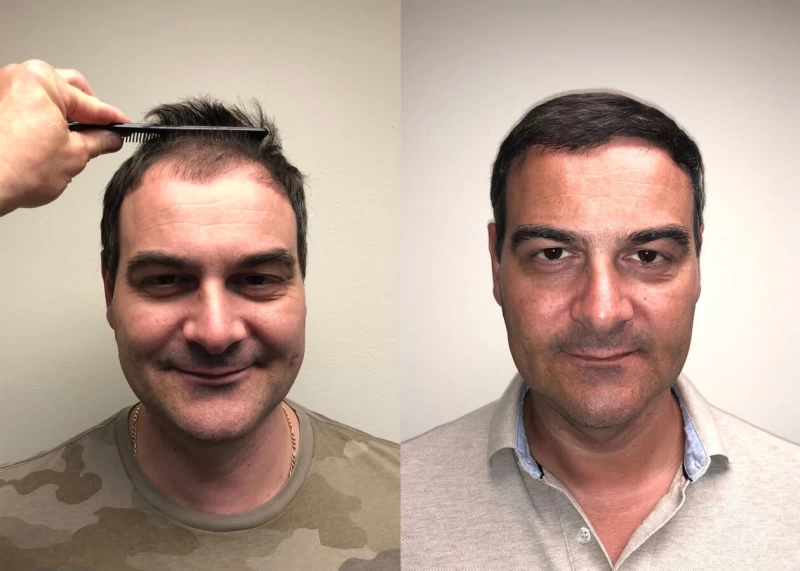
Dejan
Before & 1 Year Follow-Up
Discover the documented progress of Dejan’s hair restoration, including one surgery and results at one year, using the MaxHarvest™ Technique.
Watch Patient Video
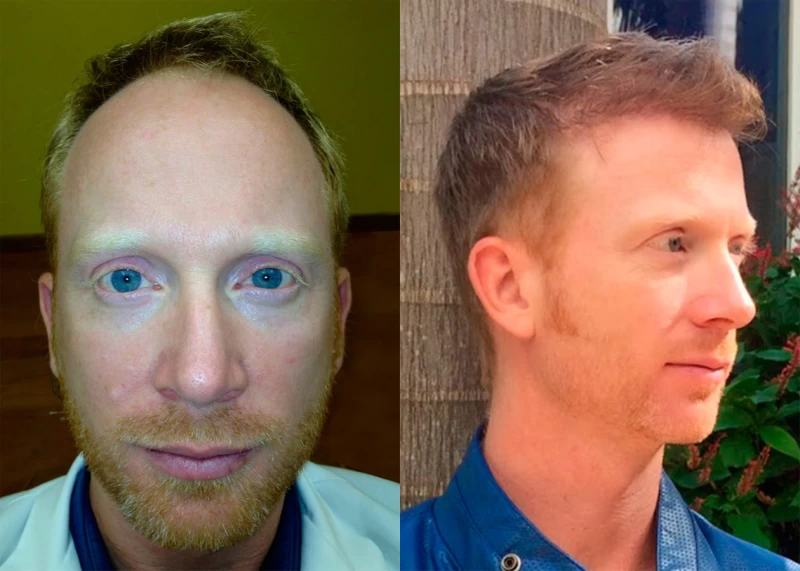
Patient 334
Before & 1 Year Follow-Up
See the before and after results from Patient 334’s hair transplant case, including one surgery and one year of follow-up.
View Patient Results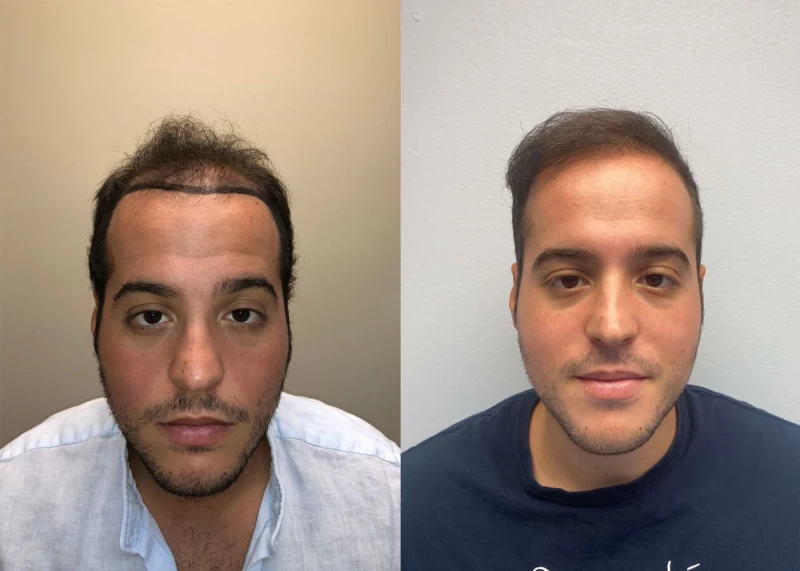
Giorgio
Before & 1 Year Follow-Up
Explore Giorgio’s hair restoration results, with one surgery and documented progress at one year, using the MaxHarvest™ Technique.
Watch Patient Video
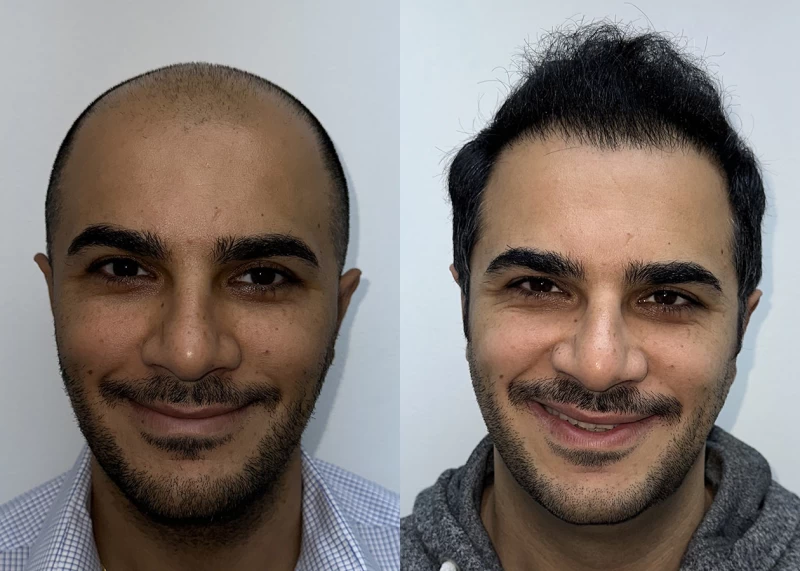
Igor
Before & 1 Year Follow-Up
Igor’s hair transplant case features before and after results from one surgery, with documented one year of follow-up, using the MaxHarvest™ Technique.
Watch Patient Video
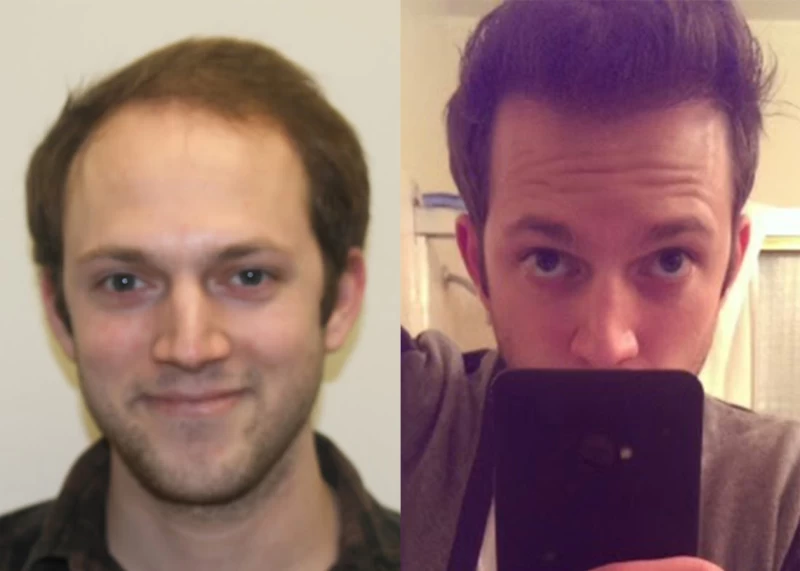
Patient 369
Before & 1 Year Follow-Up
Discover Patient 369’s documented hair restoration results, including one surgery and before and after results at one year.
View Patient Results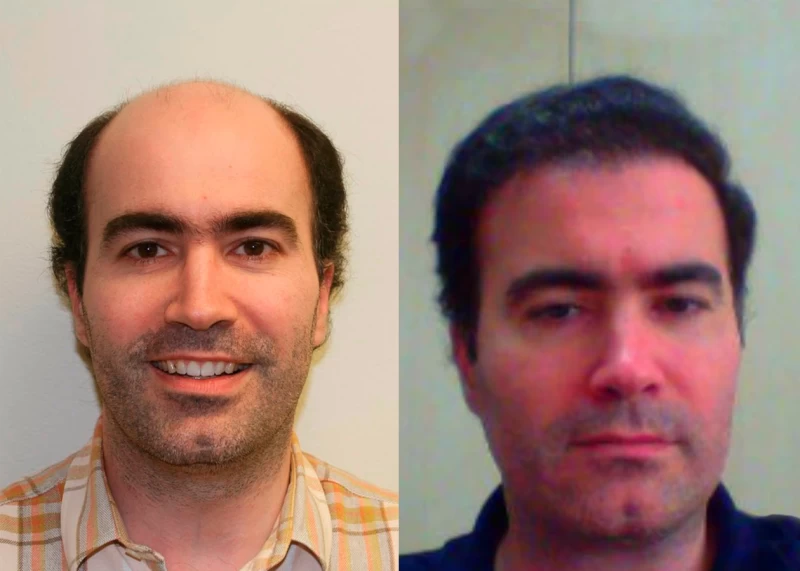
Patient 320
Before & 1 Year Follow-Up
See the documented hair transplant results for Patient 320, including one surgery and results from one year.
View Patient ResultsTrusted by 10,000+ Hair Restoration Patients Since 1997
More than 29 years of experience helping patients achieve natural-looking hair restoration results.
Hear From Hair Transplant Patients
Explore real patient experiences and learn what patients have shared about their hair restoration journey with Dr. Brett Bolton.
I'm more than happy with my results! I was so impressed with Dr. Brett Bolton's staff, care, communication and technique. My results are awesome I'm looking forward to even more growth in the next couple months! Read Patient Experience →
I was very hesitant to get another transplant here in the states. I was all set up to go to turkey. I came across Dr. Bolton and reached out. Talked to Josh he was fantastic very patient and explained everything throughly. Josh helped me set up all the arrangements since I was traveling across the... Read Patient Experience →
I walked in for a consultation and knew right away that this was the place for me to have my surgery done.
The doctor patiently explained my options and recommended the best course of action.
"Maxharvest" was my choice.
I'm quite happy with the outcome!
I now feel lot younger and more... Read Patient Experience →
I personally began losing my hair at age 36. By age 40 my crown area was very bald. Even my girlfriend began to suggest that I do something to fix my rapid hair loss because it was having a negative affect on my appearance. Surgery itself was easy and fast. Majority of the time I watched TV. The... Read Patient Experience →
Doctor Bolton is a genius! He's very personable and friendly. The staff is very sweet, and the atmosphere is relaxed. I am beyond satisfied with my results. It's been a fantastic experience. The work he's done for me has been life changing. Read Patient Experience →
I am a few months post surgery and couldn’t have had a better experience with this office. The office and the doctor were accommodating and professional. What I really appreciated was their post-surgery availability. They certainly care about their patients and are experts in this procedure. I... Read Patient Experience →
Experienced Hair Transplant Care You Can Trust
Find answers to your hair transplant questions and learn more about our approach to personalized hair restoration care, patient experience, and natural-looking results.
850+
Patient Reviews
29+
Years of Experience
100%
Patient-Focused Care
Multiple
Trusted Review Sources
Frequently Asked Questions About Hair Transplants
Get answers to common questions about hair transplants, including procedures, candidacy, costs, recovery, results, and hair restoration options.
Our Pricing Philosophy
Please understand that we do not charge by the graft. We believe that pricing hair transplantation this way can be misleading. For example, when a clinic quotes “1,000 grafts,” that number alone does not indicate how much hair you are actually receiving. A graft may contain one, two, or three hairs, and each situation represents a very different total amount of hair, even though the patient is charged the same based solely on the graft count. For this reason, we believe that graft-based pricing does not always reflect the true value or outcome of a procedure.
Instead, we have chosen what we believe is a fairer and more transparent approach: pricing based on the amount of donor tissue removed. Our planning is based on averages. The average adult male has approximately 200 hairs per square centimeter in the donor area, although individual hair density varies. Regardless of individual density, patients at the same pricing level receive approximately the same amount of donor tissue extracted. This provides consistency in the amount of tissue removed rather than relying on graft numbers that can vary significantly in hair content.
While it is not possible to guarantee an exact number of square centimeters removed, we make every effort to come as close as possible to the planned amount. When feasible, we aim to slightly exceed the planned amount rather than fall short.