Frequently Asked Questions About Hair Transplants
Explore answers to common hair transplant questions, including procedures, treatment planning, recovery, hair growth, results, and consultations with Dr. Brett Bolton.
Book Free Hair Transplant ConsultationDr. Brett Bolton
Choosing a hair transplant surgeon is an important decision. Patients often consider surgical experience, natural-looking results, donor hair management, corrective expertise, and the surgeon's approach to personalized treatment planning.
Dr. Brett Bolton has dedicated more than 29 years to hair restoration and has performed more than 10,000 hair restoration procedures. His practice includes both primary and complex corrective hair transplant procedures.
Dr. Brett Bolton is a hair restoration surgeon specializing in advanced hair transplant procedures and corrective hair restoration. With more than 29 years dedicated to hair restoration, Dr. Bolton has helped thousands of patients pursue natural-looking hair restoration results.
His approach focuses on personalized treatment planning, natural hairline design, and maximizing available donor hair to achieve natural-looking coverage and density. His hair restoration techniques include his proprietary MaxHarvest™ technique, Bolton Bundle™, and Bolton EDGE™.
Hair Transplant Reviews & Testimonials
A properly performed hair transplant is designed to provide long-lasting results because transplanted hair follicles are typically taken from donor areas that are more resistant to hereditary hair loss. Once transplanted follicles successfully establish in their new location, they can continue producing hair for many years.
In most cases, transplanted hair is considered permanent. The transplanted follicles are selected from areas that tend to be more resistant to pattern hair loss, allowing them to continue producing hair after they have successfully grown in the recipient area.
Dr. Brett Bolton has received 850+ verified patient reviews from individuals who have shared their experiences with hair transplant and hair restoration procedures.
Patient reviews provide valuable insight into the complete hair restoration journey, including the consultation, treatment experience, recovery, and results. Explore reviews from patients who have chosen Dr. Brett Bolton for their hair restoration care.
Hair Transplant Procedures
One of the most common questions about hair transplantation is whether the procedure is painful. Most patients tolerate the procedure well because local anesthesia is used to numb the treatment areas. You may feel brief discomfort while the anesthesia is administered, but the scalp should remain numb during the surgical portion of the procedure.
The most noticeable sensation for many patients is the administration of local anesthesia. Once the scalp is adequately numb, most patients experience little to no significant pain during the procedure. Individual experiences can vary depending on the procedure, sensitivity, and other factors.
The number of hair grafts needed varies from patient to patient. It depends on your pattern and extent of hair loss, the size of the treatment area, available donor hair, hair characteristics, desired density, and your long-term hair restoration goals.
A successful hair transplant is not simply about transplanting the largest possible number of grafts. Donor hair is a limited resource, so careful planning is important to balance immediate improvement with the possibility of future hair loss and additional restoration needs.
Hair transplants are designed to provide long-term hair restoration because transplanted follicles are typically taken from donor areas that are more resistant to hereditary hair loss. Once successfully transplanted and established, these follicles can continue producing hair in their new location.
Yes. After the initial recovery and shedding phase, transplanted follicles can begin producing new hair. Growth develops gradually, and the transplanted hairs continue to mature over time.
Yes. Although transplanted hair is designed to provide long-term growth, the overall appearance of your hair can change over time. This is mainly because natural, non-transplanted hair may continue to thin as hereditary hair loss progresses.
A hair transplant restores hair to areas affected by hair loss, but it does not stop the underlying progression of hereditary hair loss in untreated follicles. Transplanted follicles are generally more resistant to pattern hair loss, while existing native hair may continue to become thinner.
A hair transplant is a surgical hair restoration procedure that moves healthy hair follicles from a donor area, usually the back or sides of the scalp, to areas affected by hair loss. The goal is to restore natural-looking hair growth by carefully planning where follicles are harvested and how they are positioned in the recipient area.
Hair growth after transplantation occurs gradually. New growth generally becomes noticeable after several months, followed by continued improvement as the transplanted hairs mature. The timing and final appearance vary between patients.
In many cases, an unsuccessful FUE hair transplant can be improved through corrective hair restoration. Patients may seek repair after experiencing poor hair growth, an unnatural hairline, inadequate density, visible scarring, donor area depletion, or other problems following a previous procedure.
Corrective hair restoration begins with a detailed evaluation of the previous procedure, existing graft placement, donor hair supply, scalp condition, and current pattern of hair loss. Depending on the circumstances, correction may involve redesigning the hairline, adding grafts to improve coverage, improving density, or strategically camouflaging previous work.
FUE (Follicular Unit Extraction) and FUT (Follicular Unit Transplantation) are two established methods for harvesting donor hair for transplantation. The right approach depends on your hair loss pattern, donor hair characteristics, previous procedures, restoration goals, and long-term treatment plan.
FUE involves carefully extracting individual follicular units from the donor area and transplanting them into areas affected by hair loss. Because follicles are harvested individually, FUE can be an appropriate option for many patients when planned carefully.
Follicular Unit Transplantation (FUT) is an established hair transplant harvesting method in which a strip of donor scalp containing hair follicles is removed and carefully prepared into individual follicular units for transplantation.
During FUT, donor tissue is carefully removed from the donor area and dissected into individual follicular units. The prepared grafts are then placed into areas affected by hair loss according to the patient's restoration plan.
Follicular Unit Extraction (FUE) is a hair transplant harvesting method in which individual follicular units are removed from the donor area and prepared for transplantation into areas affected by hair loss.
During FUE, individual follicular units are carefully extracted from the donor area rather than removing a strip of scalp tissue. The harvested grafts are then prepared and strategically placed into recipient areas according to the patient's restoration plan.
A hair transplant is a surgical hair restoration procedure that moves healthy hair follicles from a donor area to areas affected by hair loss. The goal is to restore hair coverage and create a natural-looking result that fits the patient's individual characteristics.
During a hair transplant, donor hair follicles are carefully harvested, prepared, and placed into areas where additional coverage or density is needed. Treatment planning considers the patient's hair loss pattern, donor supply, hair characteristics, and long-term restoration goals.
Advanced Hair Restoration Techniques
The appearance of the donor area is an important consideration when undergoing FUT hair transplant surgery. The final appearance of the donor scar can be influenced by surgical planning, scalp characteristics, wound closure, tissue handling, and the individual healing process.
No surgeon can guarantee that a surgical scar will be completely invisible. Scar formation varies between individuals and can be influenced by genetics, skin characteristics, scalp elasticity, and healing response.
Careful preparation of follicular grafts is an important part of hair transplant surgery. Magnification allows the surgical team to examine individual follicular units more closely during preparation and helps reduce unnecessary handling or damage.
Each follicular unit contains delicate structures that need to be handled carefully. Graft preparation is therefore one component of a larger surgical process that includes donor harvesting, storage, placement, and overall treatment planning.
There is no single hair restoration technique that is right for every patient. The appropriate approach depends on the individual's hair loss pattern, donor hair characteristics, previous procedures, desired density, hairline goals, and long-term restoration plan.
Dr. Brett Bolton uses personalized treatment planning and proprietary hair restoration techniques, including MaxHarvest™, Bolton Bundle™, and Bolton EDGE™, when appropriate for the individual patient.
Hairline design is one of the most important elements of a natural-looking hair transplant. The hairline frames the face and must be designed to complement the patient's facial proportions, age, existing hair, and long-term hair restoration goals.
A natural-looking hairline is not simply a straight line of transplanted hair. Careful planning considers the patient's individual characteristics and the way natural hair grows.
Bolton EDGE™ is Dr. Brett Bolton's proprietary approach to hairline design, focused on creating a natural-looking hairline that is customized to the patient's facial features, existing hair, hair loss pattern, and long-term restoration goals.
The hairline is one of the most visible elements of a hair transplant. An appropriately designed hairline should work with the patient's facial proportions and existing hair rather than appearing overly straight, artificial, or disconnected from the surrounding hair.
Bolton Bundle™ is one of Dr. Brett Bolton's proprietary hair restoration techniques, incorporated into personalized treatment planning based on the patient's hair characteristics, donor availability, hair loss pattern, and restoration goals.
Hair restoration requires careful consideration of how follicular units are selected, managed, and placed. Bolton Bundle™ is designed as part of a comprehensive restoration strategy focused on preserving follicular units and creating natural-looking coverage.
Choosing a hair transplant approach is an important decision because available donor hair is limited. MaxHarvest™ is Dr. Brett Bolton's proprietary hair restoration technique, focused on personalized planning, careful donor hair management, graft utilization, and natural-looking restoration.
Patients experiencing pattern hair loss, those seeking improved hair coverage or density, and individuals requiring corrective hair restoration may be candidates for a MaxHarvest™ evaluation. Suitability depends on factors such as donor hair availability, hair loss pattern, previous procedures, hair characteristics, and individual restoration goals.
A MaxHarvest™ hair transplant follows a carefully planned process designed around the patient's hair loss pattern, donor hair characteristics, restoration goals, and long-term hair restoration needs. Dr. Brett Bolton's approach emphasizes careful donor management, graft handling, natural hairline design, and strategic placement.
The process begins with a detailed evaluation of the patient's hair loss pattern, scalp, donor area, hair characteristics, previous procedures, and restoration goals. This information is used to develop a personalized treatment strategy.
MaxHarvest™ and FUE (Follicular Unit Extraction) describe different aspects of hair restoration. FUE is primarily a method of harvesting individual follicular units from the donor area, while MaxHarvest™ is Dr. Brett Bolton's proprietary hair restoration technique that focuses on comprehensive donor management, graft utilization, and personalized treatment planning.
Follicular Unit Extraction (FUE) is a hair transplant harvesting method in which individual follicular units are removed from the donor area using specialized extraction instruments. FUE may be appropriate for many patients depending on their hair loss pattern, donor characteristics, and restoration goals.
MaxHarvest™ is Dr. Brett Bolton's proprietary hair restoration technique, designed to make effective use of available donor hair through careful donor management, graft handling, and personalized surgical planning. The approach is intended to help appropriate patients achieve natural-looking coverage while preserving donor resources for long-term hair restoration.
MaxHarvest™ may be considered for patients with pattern hair loss, patients seeking improved coverage or density, and individuals requiring corrective hair restoration after previous procedures. Suitability depends on the patient's hair loss pattern, donor hair characteristics, previous procedures, and overall restoration goals.
Dr. Brett Bolton has received more than 850 five-star reviews from patients who have shared their experiences with hair transplant and hair restoration care.
Choosing a hair transplant surgeon is an important decision. Patient reviews can provide insight into the experience from the initial consultation through treatment, recovery, and developing results.
Dr. Brett Bolton has performed more than 10,000 hair restoration procedures throughout his career, with more than 29 years dedicated to hair restoration. His experience includes hair transplant procedures for patients with a wide range of hair loss patterns and restoration goals.
Successful hair restoration requires more than transplanting hair follicles. Each treatment plan considers factors such as donor hair availability, hair characteristics, facial structure, age, existing hair loss, and the potential for future hair loss. Dr. Bolton uses this experience to develop personalized treatment plans focused on natural-looking, long-term hair restoration results.
Hair Transplant Recovery
Proper scalp care after a hair transplant helps protect newly placed grafts while the treated areas heal. Your surgical team will provide instructions based on the procedure performed and your individual recovery.
Some redness, swelling, tenderness, and scabbing can occur during normal healing. However, unexpected or worsening symptoms should be discussed with your surgical team. Contact your surgeon promptly if you experience significant bleeding, severe pain, signs of infection, or other concerning changes.
The first week after a hair transplant is an important part of the healing process. Patients may notice temporary changes in the scalp as the donor and recipient areas recover from the procedure.
Care instructions vary according to the procedure and your surgeon's recommendations. Patients should handle the scalp gently, follow the prescribed washing instructions, and avoid activities that could disturb the healing grafts.
Temporary hair shedding can occur after a hair transplant as the scalp and hair follicles adjust following surgery. This is commonly referred to as shock shedding or shock loss and can affect existing hair or newly transplanted hairs.
The surgical process can temporarily disturb the normal hair growth cycle. Some follicles may enter a resting phase, causing the visible hair shaft to shed while the follicle remains capable of producing new growth.
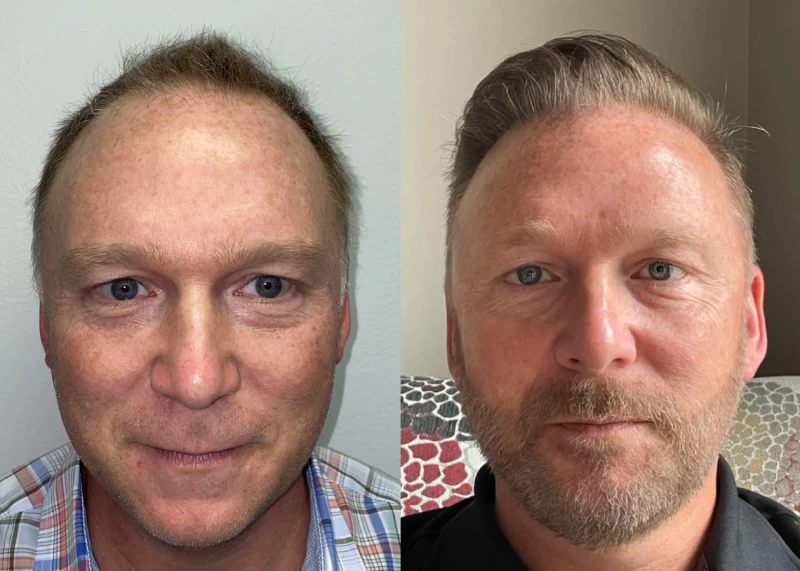
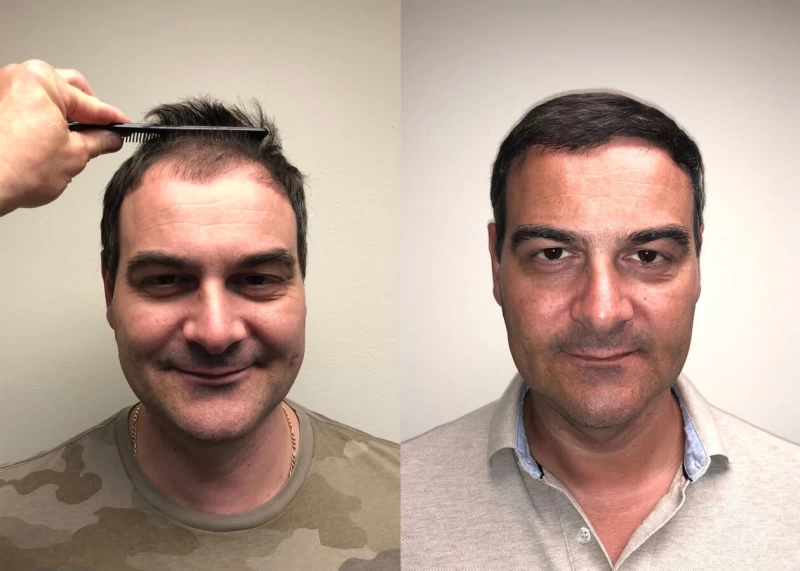
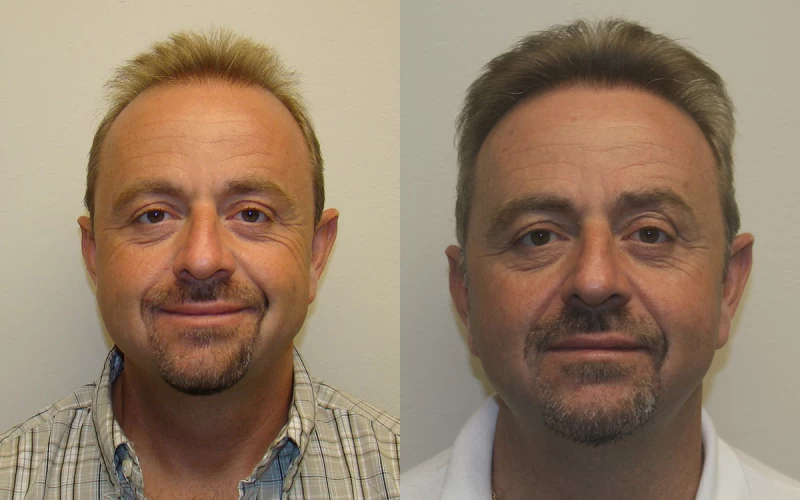
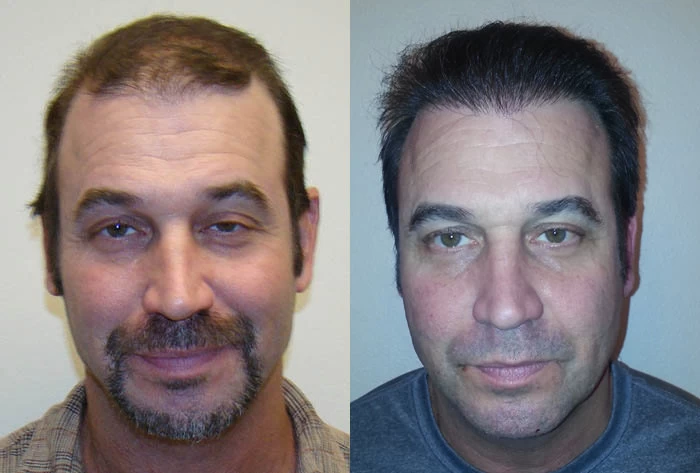
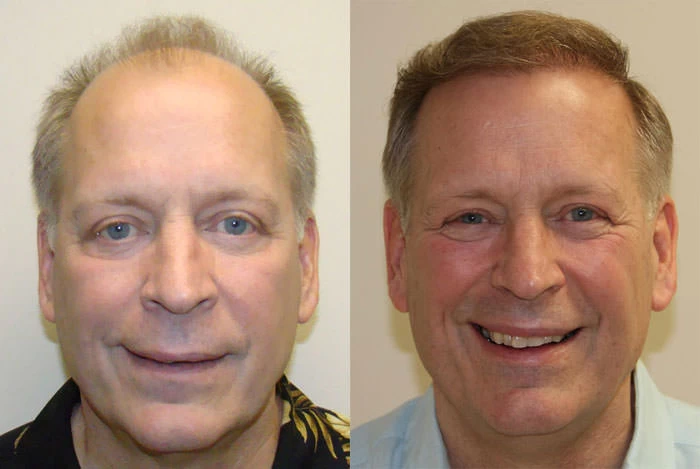
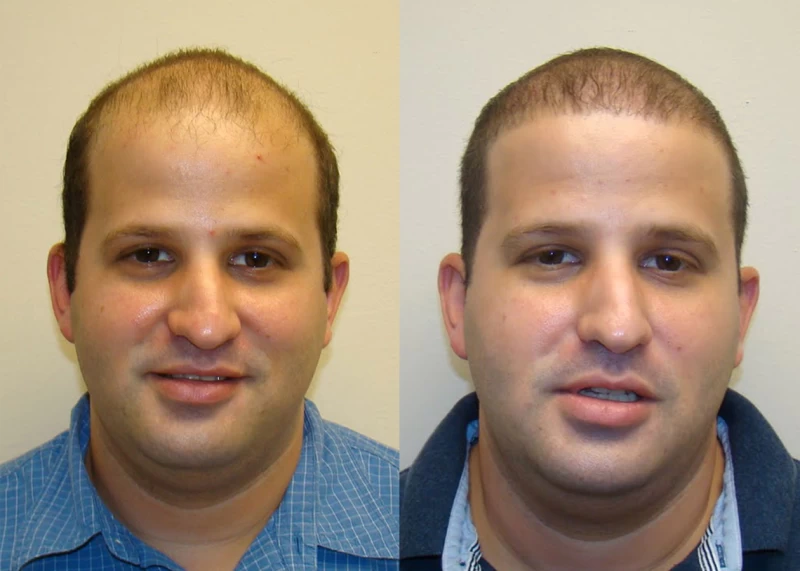
A properly planned hair transplant is designed to create a natural-looking result that blends with your existing hair. The final appearance depends on several factors, including hairline design, graft placement, donor hair characteristics, density planning, and the surgeon's experience.
An unnatural appearance may occur when there is poor hairline design, inappropriate graft placement, insufficient planning, or inefficient use of the available donor hair. Corrective hair restoration may be an option for some patients seeking to improve the appearance of a previous procedure.
Still Have Questions About Hair Transplants?
Our team is here to help you understand your hair restoration options and find the right approach for your needs.
Book Your Free Hair Transplant ConsultationHear From Hair Transplant Patients
Explore real patient experiences and learn what patients have shared about their hair restoration journey with Dr. Brett Bolton.
Currently 3 months out of surgery and already seeing results. Im very happy that I chose Dr. Brett Bolton to do my hair transplant for me. The hardest part of the process is waiting on your hair to start growing. My buddies thought that I was insane for even attempting a hair transplant. They... Read Patient Experience →
Great Hair is an excellent experience. Dr. Bolton and Staff spend quality time understanding your goals and mapping a plan to achieve total customer satisfaction. After surgery, they follow-up appropriately and treat you as part of the "Great Hair Family" when answering questions and providing... Read Patient Experience →
I had an excellent experience with Dr Bolton and his staff. The hair transplant consultant Josh was professional and answered all of my questions. I was losing hair in the frontal forelock, vertex and crown. I had the max harvest plus procedure. Dr Bolton consulted with me prior to the surgery and... Read Patient Experience →
Hi I'm Scott one of Dr. Brett Bolton's patients. I would have to say hair loss affected me as an actor its very important to look my best. When you come to Greathairtransplants everyone treats you as a friend including Dr. Brett Bolton. The procedure went amazing they give you food, snacks, and... Read Patient Experience →
I first started noticing my hair loss at about 18 years old. I had my first hair transplant procedure at 20, my second procedure at 22, my third procedure at 24 and FINALLY I FOUND DR.BOLTON for my final procedure at 26! I couldn't be happier with the results they are life changing! I wish I did it... Read Patient Experience →
Expectations were well communicated. Premeeting was truly consultative. All my questions were answered. From there they were a class act. Highly recommend going with Josh's lodging arrangement. I give them five stars. Read Patient Experience →
Experienced Hair Transplant Care You Can Trust
Find answers to your hair transplant questions and learn more about our approach to personalized hair restoration care, patient experience, and natural-looking results.
850+
Patient Reviews
29+
Years of Experience
100%
Patient-Focused Care
Multiple
Trusted Review Sources